


My favourites
Easily save and review your favourite models and offers so you don't lose track of them.
 7'
More versatile spaces, greater onboard comfort and technology that makes boating easier. The latest developments from Cannes and Barcelona reveal how motorboats, sailing yachts and catamarans are evolving.
Boating trends for 2027 are beginning to take shape following the Cannes Yachting Festival and the Barcelona International Boat Show. Shipyards’ latest offerings show a growing focus on space optimisation, efficiency and ease of handling, with solutions that connect a boat’s performance with the experience of living aboard.
The season has provided concrete examples: BENETEAU presented the Swift Trawler 43 and the Gran Turismo 40 Open in Cannes, while Barcelona dedicated its Innovation Dock to electric boats and devices. Alongside these launches, current ranges reveal design directions that are likely to continue developing over the coming season.
At Hermanos Guasch, we explore this evolution through the offerings of Beneteau, Excess Catamarans, Sasga Yachts, Wellcraft, CNB Yachts and Astondoa, looking at how each shipyard interprets the needs of navigation and life aboard.
Layout is one of the areas where the evolution of boat design is most apparent. Turning a dining area into a sunpad or extending the aft deck allows owners to adapt the boat to different moments throughout the day.
Within BENETEAU’s current range, the Gran Turismo 35 illustrates this approach with a modular cockpit, convertible seating and fold-down balconies. These solutions expand the ways the deck can be used and strengthen the connection with the water while at anchor.
The Sasga Yachts Menorquín 36 Open develops this versatility through a Mediterranean approach to boating. Its folding tables, sunpads and outdoor galley create a deck designed for spending the day together outdoors, with the protection of a hardtop integrated into the overall design.
Modularity also requires careful attention to circulation and stowage. The additional space must remain comfortable when the boat is occupied, and movable features must be easy to rearrange. These solutions offer their greatest value when adaptability and practicality work together.
Comfort depends on decisions that affect everyday use of the boat. Ventilation, natural light, sun protection and storage become particularly important when a day trip turns into a weekend away or an extended passage.
On the Excess 13, the connection between the galley and cockpit makes moving between indoor and outdoor spaces easier. Stowage capacity and a dedicated desk area meet different needs during time aboard. Its design also pays attention to ventilation, with solutions intended to reduce demand for air conditioning.
On larger sailing yachts, comfort is also linked to ease of handling when sailing as a couple or with family. Deck layout and the arrangement of sail-handling systems are particularly important for owners who want to enjoy their yacht with only a few people aboard, even on long passages. The CNB 62, highlighted by the Cannes organisers among the show’s new models, combines a bright saloon with a design that facilitates this style of sailing. A larger yacht can therefore provide more space and comfort without necessarily requiring a large crew or professional crew members: the experience of those aboard, the equipment and passage conditions remain decisive.
These approaches demonstrate the importance of allowing sailing and relaxation to coexist. Cooking, accessing luggage or moving between areas should remain compatible with manoeuvring and handling the boat. Liveability is therefore a quality that matters throughout the passage, both for those sailing the yacht and for those enjoying their time aboard.
Energy efficiency holds a prominent place in the boating industry. The Barcelona International Boat Show’s Innovation Dock has introduced visitors to electric boats and devices through displays and on-water demonstrations.
The development of these alternatives forms part of a broader transformation. Hull form, displacement, propulsion and operating speed influence performance and range. Added to this is the energy needed to run onboard systems during stays in port or at anchor.
The BENETEAU Grand Trawler 63 exemplifies the relationship between naval architecture and intended use. Its displacement hull is designed to support cruising at moderate speeds, in keeping with a boat intended to cover distances and extend time aboard.
In sailing, efficiency is also addressed through weight management, hull shapes and the sail plan. These decisions affect the boat’s behaviour and must be balanced with accommodation volume and equipment.
We expect different propulsion and energy management solutions to coexist. Their application will depend on each boat’s needs: daily trips, long passages, charging availability and consumption by onboard systems. This diversity means that efficiency must always be assessed in relation to a specific use.
Technology integration is moving towards more direct access to information and more convenient equipment management. A system’s usefulness depends as much on its functions as on how easy they are to use.
BENETEAU provides an example with Seanapps, which allows owners to view information about various onboard systems on their smartphone and organise maintenance, depending on the equipment installed. Connectivity thus gives owners greater scope to monitor their boat.
In sailing, simplification also has a physical dimension. The First 60 centralises sail-handling equipment and pays attention to helm ergonomics, while separating the areas intended for sailing, dining and relaxing.
Both approaches address the same need: making everyday tasks easier without adding unnecessary complexity. Accessible controls, clear information and a coherent layout help integrate technology into the boating experience.
This monitoring complements the boat’s regular upkeep. As we explain in our article on preventive boat maintenance, planning inspections helps organise maintenance work and anticipate potential issues.
Versatility is also reflected in the ability to combine activities. Day trips, swimming outings and overnight escapes come together in designs that broaden the possibilities of a single boat.
The Gran Turismo 40 Open, presented by BENETEAU in Cannes, responds to this combination with an approach geared towards both enjoying outdoor spaces and weekend getaways. At the same show, the Swift Trawler 43 demonstrated another priority: everyday comfort and extended cruising stays.
Configuration options allow the boat to be tailored even more closely to its owner. Within the Wellcraft range, the 28 T-Top offers alternatives for the windscreen, engines and cockpit layout to suit different preferences.
Development is therefore taking two directions: spaces that transform throughout the day and options selected when configuring the boat. Protection, relaxation areas and storage are adapted to the intended use, from day trips to longer passages.
These trends take on distinctive characteristics in each segment. Sail and power describe forms of propulsion, whereas a multihull is a type of boat architecture that can use either.
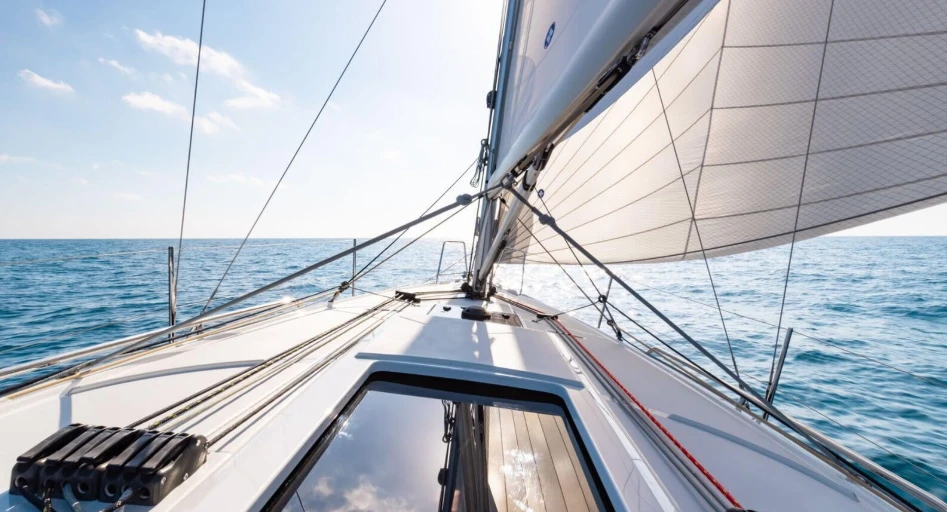
On monohull sailing yachts, the arrangement of sail-handling systems and helm ergonomics are essential to combining performance and comfort. The deck must make the crew’s work easier while allowing those relaxing to enjoy the passage without interfering with manoeuvres.
BENETEAU and CNB Yachts offer different interpretations of this balance, from the enjoyment of performance sailing to long-distance cruising. This evolution can also be explored in our review of 40 years of BENETEAU Oceanis, which looks at changes in cruising yacht design, liveability and handling.
On motorboats, intended use determines the importance of each design decision. Extended cruising places particular emphasis on range and sheltered spaces, while day trips favour open decks and easy access to the water.
BENETEAU, Sasga Yachts and Wellcraft demonstrate how these priorities can be combined in different ways. A variety of layouts makes it possible to accommodate different uses within the same boat category.
On sailing catamarans, the available space must be considered alongside weight, structure and hull shapes. Interior layout and equipment are part of the same balance that determines behaviour under sail.
Excess Catamarans develops this approach with a combined focus on comfort and feel at the helm. The aim is for the ability to live aboard to coexist with an engaging sailing experience.
The boat show season points towards more adaptable, comfortable and manageable boats. The most significant developments lie in how different solutions work together: how a layout makes sharing space easier, how design supports efficiency and how technology helps owners manage the boat as a whole.
At Hermanos Guasch, we follow this evolution through Beneteau, Excess Catamarans, Sasga Yachts, Wellcraft, CNB Yachts and Astondoa, matching each shipyard’s offerings to different boating plans.
Contact the Hermanos Guasch team to discover our models and receive advice on your next boat.
VIP access
to the world of boating
Subscribe and be the first to hear about offers, sea trials and exclusive events. Useful, straightforward content for discerning sailors.
No spam. Unsubscribe anytime.