


My favourites
Easily save and review your favourite models and offers so you don't lose track of them.
 5'
5'
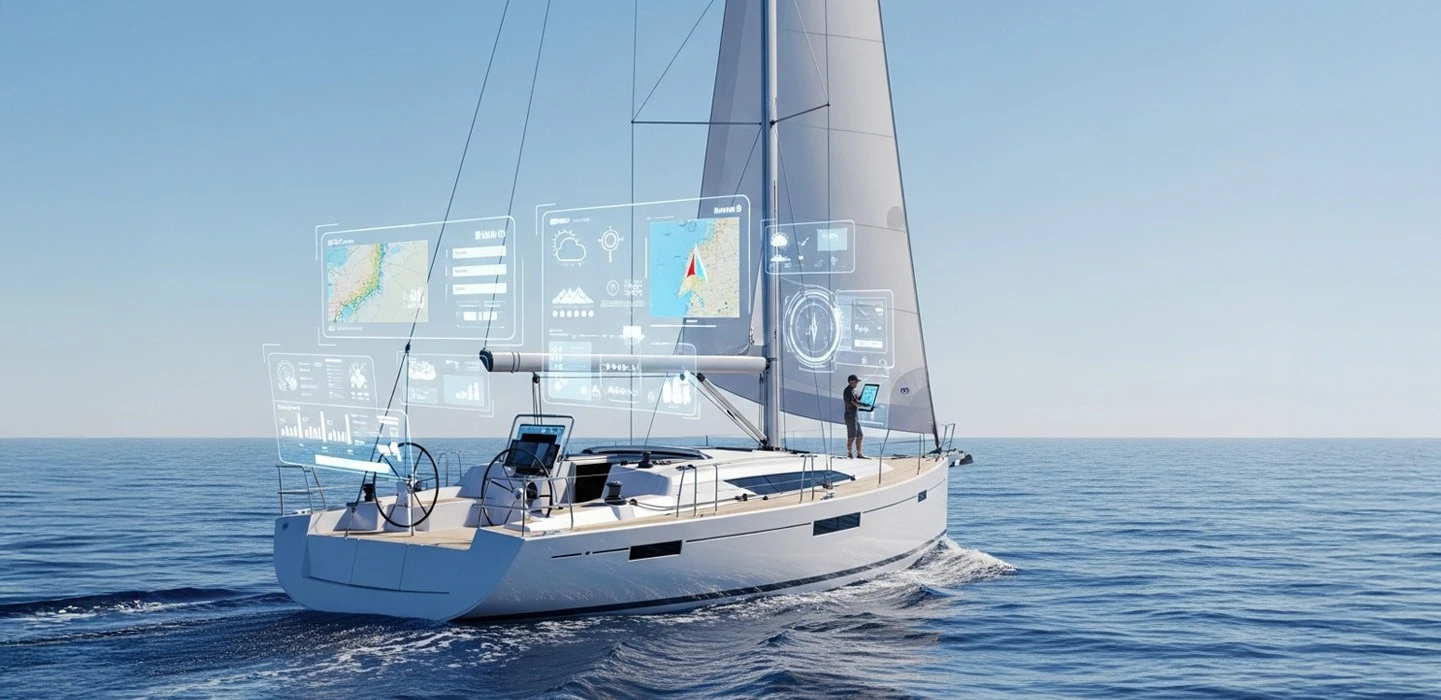
21st-century navigation no longer relies solely on paper charts and traditional seamanship. Nautical technology has evolved to offer smart tools that significantly improve safety, energy efficiency and onboard comfort. Whether on long passages or day trips, having the right essential nautical gadgets can make the difference between basic sailing and a fully autonomous, well-equipped experience.
Below is a professional selection of 10 nautical devices that every modern boat owner or skipper should consider installing on board.
Today, the plotter is the digital command center of the boat. It combines electronic charts, depth data, radar, AIS and GPS tracking on a single touchscreen display.
Advantages:
Accurate navigation
Real-time data monitoring
Safe and efficient route planning
An essential device to prevent collisions and navigate with advanced information about maritime traffic. It receives (and transmits, if Class B) heading, speed and position data from other vessels.
Essential for solo sailing or long-distance navigation, the autopilot maintains the programmed course without constant manual intervention. Some models integrate with the plotter or wind sensors.
Benefits:
Energy and effort savings
High accuracy on long courses
More relaxed navigation
Energy onboard is a limited resource. Marine solar panels help maintain energy autonomy during long passages or anchorages without using a generator.
Recommended features:
Foldable, non-slip and saltwater-resistant
USB output or MPPT charge controller
Staying connected from remote coves or low-coverage marinas is possible thanks to WiFi amplifiers designed specifically for marine use.
Advantages:
Access to weather forecasts
Remote work from onboard
Remote boat monitoring via apps
Marine LED lighting is efficient, durable and essential for nighttime visibility and safety. Available in submersible, magnetic or solar-powered models for multiple onboard uses.
Applications:
Deck, cockpit, anchoring and interior
Emergency signaling
Compact transmitters that integrate with the boat’s system or a smartphone and trigger an immediate alarm in case of a person falling overboard.
Recommended features:
Automatic activation on water contact
Compatibility with plotters or mobile apps
A portable or externally mounted wind sensor provides accurate apparent and true wind data, essential for sail trimming and maneuver planning.
Main uses:
Sail trim optimization
Regatta training
Safety during sudden wind changes
An efficient marine fridge keeps food and drinks in optimal condition without relying on the boat’s main refrigeration system.
Ideal models:
Low 12V power consumption
Options with built-in battery or solar input
Water-resistant power banks allow you to recharge critical electronic devices such as handheld GPS units, smartphones or emergency lights, even in wet conditions.
Recommended requirements:
IP67 rating or higher
Minimum capacity of 20,000 mAh
USB-A and USB-C ports
Equipping your boat with technological and functional gadgets is not a luxury—it represents a real improvement in terms of safety, sustainability and comfort. Whether to maintain energy autonomy, optimize navigation or ensure offshore connectivity, these devices truly enhance the onboard experience.
Plan your purchases according to your sailing style and your boat’s capacity, and every voyage will become more efficient, comfortable and safe.
VIP access
to the world of boating
Subscribe and be the first to hear about offers, sea trials and exclusive events. Useful, straightforward content for discerning sailors.
No spam. Unsubscribe anytime.