


My favourites
Easily save and review your favourite models and offers so you don't lose track of them.
 3'
3'
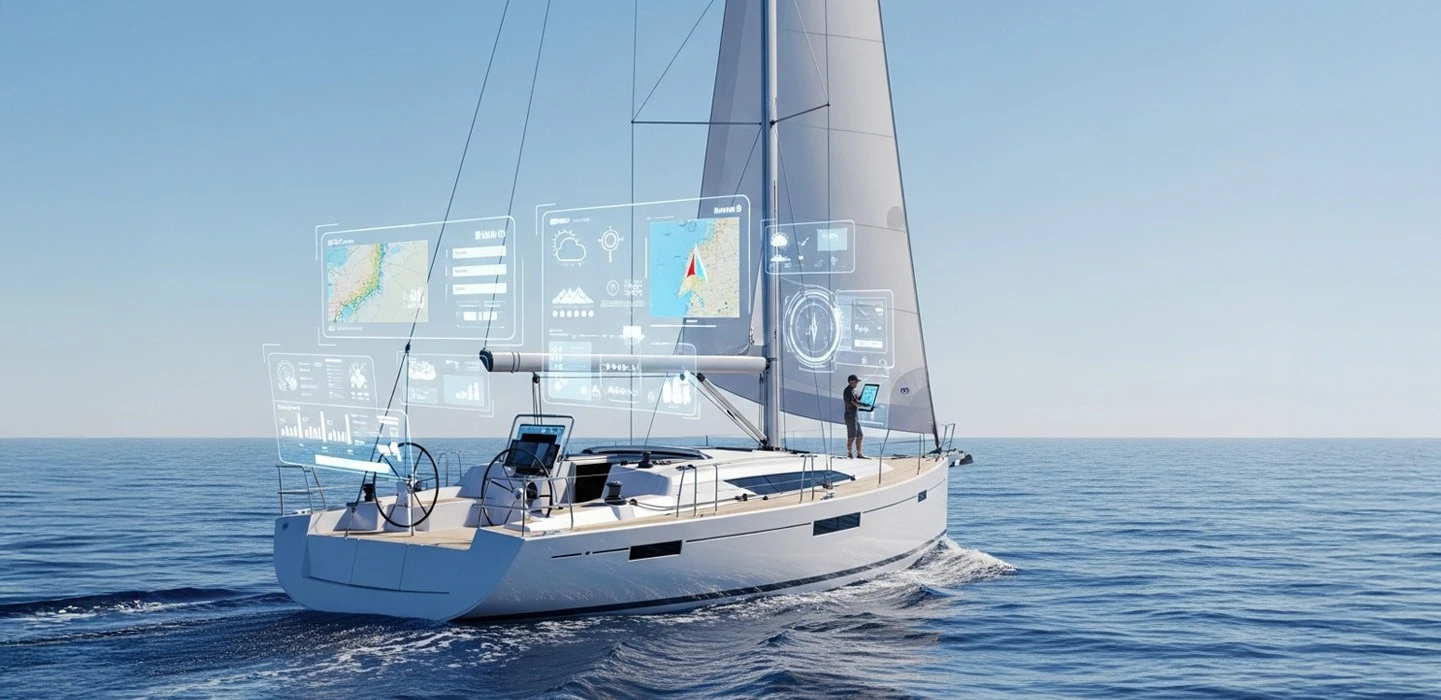
In an era dominated by touchscreens, high-precision GPS, and nautical apps that locate you instantly, many wonder:
Does it still make sense to learn to navigate with a chart and compass?
The short answer is: yes, more than ever. In this article, we explain why these traditional tools remain essential for any serious navigator — and how to combine them with modern technology to improve your safety and autonomy at sea.
It is the classic navigation method in which you determine your position and plot your course using:
Nautical chart: The “map” of the sea, showing depths, hazards, visual aids, and coordinates.
Bearing or point compass: To measure angles and courses on the chart.
Tools like a nautical ruler, protractor, and pencil: To draw course lines, estimate positions, and measure distances.
This system, also called coastal or traditional navigation, was for centuries the only way to orient yourself at sea.
Dead batteries, GPS failures, wet or damaged screens.
What if the power goes out? What if your phone falls in the water?
Knowing how to use a chart is your essential Plan B.
Learning with chart and compass forces you to think: analyze currents, wind, hazards, and safety margins.
It makes you a more aware and precise navigator, even when using technology.
In Spain, for example, titles such as PER, Yacht Skipper, or Captain of a Yacht include exercises with charts.
You cannot pass without mastering the basics.
Being able to determine your position without relying on a digital device gives you a valuable sense of control.
You can make smarter decisions if the route does not go as planned.
On short trips or in areas with irregular coverage, the chart allows you to plan safe and alternative routes.
You can estimate positions, identify notable points, and anticipate safe anchorages.
It’s not about choosing one or the other, but about combining them intelligently:
| Chart and Compass | GPS and Apps |
|
|
Always carry an updated chart on board.
Do simple exercises: determine your position, plot a course, measure distances.
Use the compass to mark coastal references.
If you use apps like Navionics or OpenCPN, compare the route with the paper chart.
Even though we now have incredible digital tools, navigating with chart and compass remains an irreplaceable skill. It makes you a more complete, safer navigator, ready for the unexpected.
So next time you go on board, don’t leave the chart at the bottom of the drawer. Use it. Practice. And remember: the best navigator is not the one with the most technology, but the one who knows how to orient themselves best, even with the basics.
If you are starting to navigate with chart and compass, we also recommend reading How to Read a Nautical Chart: Key Tips to Stay on Course, where we explain step by step how to interpret each element of the chart to make your navigation even safer and more precise.
VIP access
to the world of boating
Subscribe and be the first to hear about offers, sea trials and exclusive events. Useful, straightforward content for discerning sailors.
No spam. Unsubscribe anytime.